Wednesday, September 16, 2026

A Carpenter's Hands: Jacob Scott's Tools and the Man Behind Them


A Carpenter's Hands: Jacob Scott's Tools and the Man Behind Them

Some of the best genealogy finds aren't documents at all — they're objects. This week I want to introduce you to Jacob Scott, one of my husband Steve's ancestors, through a set of tools that have outlived him by well over a century.

The Tools Themselves

In the collection of the Clark County Historical Society here in Marshall sits a set of carpentry tools that once belonged to Jacob Scott. They were donated many years ago by his grandson, Roy Scott — a small act of preservation that means a set of working hand tools from the 19th century is still here for us to look at today, rather than lost to time like so many everyday objects from that era.

Jacob is Steve's 5th great-grandfather, connected through his Grandma Peggy's line. He was born in 1811 in Pennsylvania and married Hettie Brown in Ohio in 1835. From there, the couple moved further west into Clark County, Illinois, where they'd spend the rest of their lives together and raise at least nine children. Jacob originally settled in York before eventually moving into Marshall after he retired from farming. He passed away in 1901, having lived to see Clark County transform from frontier settlement into an established community across nearly seven decades.

There's something grounding about knowing the actual tools a man used with his own hands are still sitting in a collection just down the road from where he lived and worked. Genealogy gives us names and dates. Objects like these give us something closer to presence.

A Source Worth Knowing: The 1883 County History

Alongside the tools, I also want to highlight where a lot of the biographical detail on Jacob comes from: an entry in the History of Crawford and Clark Counties, Illinois, published in 1883. If you haven't worked with one of these county history books before, they're worth understanding, because they're a genuinely useful — if imperfect — genealogical source.

Books like this one were typically sold by subscription. Families literally paid to have their information included, which shaped both the strengths and the limitations of what ended up in print. On the strength side: the entries are often remarkably detailed and, in my experience, quite accurate. They can fill in exactly the kind of information that's hard to find anywhere else — parents' names for individuals born before census records tracked full household members, additional places a family lived before settling for good, occupational details, that sort of thing. For an ancestor like Jacob, born in 1811, well before the 1850 census started naming every person in a household, a source like this can be the difference between a name floating alone on a pedigree chart and an actual life story.

On the limitation side, it's worth remembering exactly why these books read the way they do: since families paid for their own entries, county histories tend to be very complimentary. You'll rarely find anything in one of these entries that doesn't put the family in its best light. That doesn't make the factual details unreliable — names, dates, and places tend to hold up well — but it does mean you should read the character assessments and glowing descriptions with a grain of salt, the same way you might read a really well-written obituary.

Why I Love Finds Like This

Between a preserved set of carpentry tools and a subscription-funded county history entry, Jacob Scott has left behind more of himself than a lot of ancestors from his era manage to. A farmer who moved west with his young family, raised at least nine children, worked with his hands well enough that his tools were worth keeping generations later, and retired into the town where his descendants — including my own husband — would eventually settle for good. That's the kind of full picture genealogy work is really after: not just proving a connection exists, but understanding who the person actually was.

Yours in Grit and Grace, Jamie

Wednesday, September 9, 2026

A special piece of Poorman family history…


🪡🧵⛪️🧵🪡  
 
A special piece of Poorman family history…


There is a quilt in the collection of the Clark County Historical Society and is on display at the museum iun Marshall, Illinois. It was pieced together in 1912-1913 by the members of St. Paul Methodist Church, near Martinsville, for the Tague family who was moving to Minnesota. 


Each church family has a square with their names stitched in it. One of those squares was dedicated to the Sharp family - father Frank and his children Everett, Eva and Goldie. 


Another square features the Howe family - JB and Alice and their children - Claud, Hobart, James, Ada, Ida and Lurah. 


Just a few years later, on February 16, 1915, Ida Howe and Everett Sharp were married. Ida and Everett were Steve’s great grandparents - his Grandma Grace’s parents.


Ida and Everett with their children Joe, Vivian, Grace, Carl, and Modena


Thursday, September 3, 2026

Good Soldier: The Court-Martial and Quiet Courage of Wesley Washburn


Good Soldier: The Court-Martial and Quiet Courage of Wesley Washburn

If you read my recent post about Abraham Washburn's land patent, you met one Washburn ancestor who waited forty years for the government to make good on a promise. This week I want to introduce you to his son — my third great-grandfather, Private Wesley Webster Washburn — whose own story took him from a Clark County enlistment line to a court-martial in Arkansas, and out the other side with a notation on his muster-out card that still gives me chills: "Good Soldier."

A Nineteen-Year-Old Enlists

Wesley enlisted on February 1, 1862, right here in Marshall, Clark County, Illinois. He was nineteen years old. He mustered into Company C of the 62nd Illinois Infantry that April in Jonesboro, and from there the regiment headed into the Western Theater — Arkansas, Little Rock, Pine Bluff — nowhere near the battles that make it into most textbooks, but very much in the thick of the war all the same.

That October, Wesley was wounded in the foot. He recovered, returned to duty, and by the following summer was showing up in hospital records again for a common ailment of camp life — nothing dramatic, just the ordinary grind of soldiering that rarely makes it into the family stories we tell.

The Court-Martial

Here's where Wesley's story gets interesting. In early 1864, at Little Rock, he was court-martialed on two charges: insubordination and robbery. I'll admit, the first time I found that record, my stomach dropped a little. Nobody wants to find that in an ancestor's file.

But context matters enormously in genealogy, and this is a case where digging further completely changed the story. Company C's captain, Silas Overmire, had been dismissed just weeks earlier, in December 1863 — and later testimony, given decades afterward in a Congressional report, described real problems with command atmosphere in the 62nd Illinois around that time. Whatever chaos surrounded that dismissal, Wesley pleaded not guilty to both charges.

He was acquitted. On all counts.

I don't know exactly what happened in that courtroom, and I may never find out — but I know how the record ended, and it wasn't with a guilty man.

Pine Bluff and Muster Out

After his acquittal, Wesley was detached to the 11th Ohio Battery at Pine Bluff, Arkansas, serving with them from August through December of 1864 before rejoining the 62nd Illinois. He mustered out on May 2, 1865, in Springfield — and whatever happened at that court-martial, whoever was reviewing his record at the end of his service thought enough of him to write two words next to his name: "Good Soldier."

Life After the War

Wesley came home and built a full life. He married Sarah Jane Handley in October 1870 in Edgar County, Illinois, and together they raised ten children. Sometime around 1896 or 1897, the family moved to Terre Haute, Indiana, where Wesley worked at Dill's grocery store. He died there on December 31, 1906, and was buried at Highland Lawn Cemetery. His obituary noted veterans among his pallbearers — men who had likely known exactly what "Good Soldier" meant, even if the rest of us are only piecing it together now.

The Record That Got Away

Here's the frustrating coda to this story, and one every genealogist eventually runs into: Wesley's pension file — which almost certainly would have filled in gaps a compiled service record can't — was charged out from the VA back in 2004 and never returned. It was never transferred to the National Archives. As far as I can tell, it's simply gone.

It's a good reminder that genealogy isn't just about what we find. Sometimes it's about making peace with what we'll never get back, and building the fullest, most honest picture we can from what survives — a muster roll here, a court-martial order there, an obituary that happened to mention a grocery store and a street address.

Wesley Washburn wasn't a general or a name in a textbook. He was a nineteen-year-old from Marshall who got wounded, got accused, got acquitted, and came home to raise ten children and work behind a grocery counter for a decade. That's the kind of story land records and muster rolls and hospital ledgers hand you if you're willing to chase every thread — and it's exactly why I love this work.

Yours in Grit and Grace, Jamie

Wednesday, August 26, 2026

Chasing a Signature: What a Land Patent Told Me About My 4th Great-Grandfather


Chasing a Signature: What a Land Patent Told Me About My 4th Great-Grandfather

Of all the record types I get to teach at Roots & Records, land patents might be my favorite. They're not flashy. They don't come with a dramatic obituary or a scandalous headline. But they're one of the most consistent, most overlooked records in American genealogy — and one of them led me straight to my own 4th great-grandfather, Abraham Washburn.

What a Land Patent Actually Is

When Illinois was a "federal land" state, unclaimed land was surveyed, divided, and sold or granted through federal land offices. The very first transfer of a piece of land from the government to a private owner was called a patent, and the first owner was the patentee. Everything after that — every sale, every mortgage between private owners — became a deed, recorded at the county level. But that first patent is a federal record, and it's often the earliest paper trail an ancestor left behind in a new place.

Because land was so highly sought after, these transactions were recorded consistently from the moment settlers arrived. That makes land records one of the most reliable ways to establish when and where someone actually lived — often years before they show up in any other surviving document.

Finding Abraham

I found Abraham Washburn through the Bureau of Land Management's General Land Office (GLO) records — a free online database covering federal land patents from 1788 into the 1960s, with the originals held at the National Archives. All I needed to start was a state and a surname. I searched "Washburn" in Clark County, Illinois, and there he was.

The record told a story I hadn't expected. Abraham had served in Captain Davidson's Company of the Ohio Militia Volunteers during the War of 1812. His military service earned him the right to claim land — but he wasn't actually able to claim it until the Scrip Warrant Act of 1850. Nearly forty years after he served, the government finally made good on that promise, and his patent was issued in 1851.

Holding It in My Hands

The GLO database gave me the patent image itself, along with a tab for "Related Documents" — patents from the same section of land, which can point you toward an ancestor's actual neighbors. But the document that stopped me in my tracks was something else entirely: the original bounty land warrant Abraham submitted to claim his land, held at the National Archives in Washington, D.C.

Some land claim files are packed with paperwork, especially if a claim was ever denied or disputed — genealogical gold, if you're lucky enough to find one. Abraham's file held only the one document. But last summer, I got to hold that single piece of paper in my own hands at the National Archives. Forty years of waiting, one signature, and a direct line to a name I'd only known from a pedigree chart before that. It's hard to describe what that moment felt like.

Try It Yourself

If you want to go looking for your own ancestor's land patent, here's the short version:

  • Start at the BLM-GLO records search (glorecords.blm.gov) — it's free, and all you need is a state and a surname.
  • Note that the date on a patent is when the warrant was issued, not necessarily when the land claim was made. If land was purchased on credit, the patent could come years — even decades — after the fact, just like Abraham's.
  • Once you find a hit, check the Patent Image tab for the document itself, and the Related Documents tab for neighboring patents in the same section.
  • If your ancestor's claim involved a military warrant, the underlying paperwork may be held separately at the National Archives and worth requesting.

Yours in Grit and Grace, Jamie

Tuesday, August 18, 2026

Come Grow Your Family Tree: Roots & Records at Marshall Public Library


Come Grow Your Family Tree: Roots & Records at Marshall Public Library

One thing I get to do every month that never gets old: gather with our Roots & Records crew and dig into family history together.

If you haven't joined us yet, here's the rundown. Roots & Records is our monthly genealogy club at Marshall Public Library — second Wednesday of the month, 10:30 to noon. Whether you're just starting to poke around your family tree or you've been at this for decades, it's a welcoming place to learn, share, and get unstuck. Every session gives you access to Ancestry Library Edition and FamilySearch.org right there in the library, tips for research, unique local resources you won't stumble onto anywhere else, and help working through brick walls — bring your toughest research problem and let's take a crack at it together as a group.

This Month: Mapping Your Family History

Last week's session was all about maps — historic territory and county maps, land patent and land office records, township-and-range surveys, plat maps, the whole toolkit for figuring out not just who your ancestors were, but where they actually lived. Old maps can pinpoint a vanished homestead, trace a migration route, or turn up a neighbor's name that cracks open a whole new research thread. It's one of my favorite topics to teach because the "aha" moments happen fast once people see their family's land on paper for the first time.

Looking Ahead

Here's what's coming up on the Roots & Records calendar:

  • September 9 — Special guest Brian Murphy, Clark County Historical Society Board Member, shares the story of researching his own grandfather — proof that curiosity, persistence, and a willingness to look past the obvious records can uncover some remarkable family stories.
  • October 14 — Newspapers: More Than Just Obituaries. We'll dig into wedding announcements, social columns, legal notices, school news, and all the everyday community stories that add color to a family history.
  • November — No meeting this month; the library will be closed in observance of Veterans Day.
  • December 9 — Holiday Traditions. Bring a favorite family recipe, a treasured ornament, a holiday photo, or a cherished memory as we close out the year celebrating the traditions that connect generations.

We also had a wonderful session back in July with Edie Breneman, President of the Clark County Historical Society, who shared insights from her 40 years as a genealogist — if you missed it, you missed a good one.

Join Us

Roots & Records meets the second Wednesday of every month, 10:30 AM to 12:00 PM, at Marshall Public Library, 612 Archer Avenue, Marshall, IL. No registration required, no experience necessary — just curiosity about where you came from. Questions? Reach out to me directly at jpoorman@marshallplib.com.

Yours in Grit and Grace, Jamie

Wednesday, August 12, 2026


Still Here (Two and a Half Years Later)

I just looked at the date on my last post here and, well... wow! Two and a half years. That's not a short break, that's practically a sabbatical I never announced.

Here's the truth: it's not that things went quiet. It's the opposite. Life got so full that the blog was the thing that got set down — and once something sits untouched that long, picking it back up starts to feel like its own project. So instead of trying to catch you up on two and a half years all at once, I'm just going to start again, right here, with what's been keeping me busy lately.

Chasing Dr. Chaplin

Back in 2012, a patron brought me a letter that had been sitting in a desk for years, and it turned into one of the wildest research rabbit holes of my career. James M. "Judd" Chaplin — bigamist, identity thief, a man who spent part of his life posing as a physician named Dr. Orren Leroy Barton — led me through court records, pension files, and prison documents across nearly a dozen states before I was done with him.

I built the whole case using the Genealogical Proof Standard as my roadmap, which turned out to be as much a story about how we prove things in genealogy as it is a story about Judd himself. This one has grown into a full conference presentation, and I've officially submitted the proposal to the National Genealogical Society's 2027 conference. Now comes the hardest part of any submission: the waiting.

Roots and Records is Coming in October

Closer to home, mark your calendars — Marshall Public Library is hosting our Roots and Records genealogy and local history conference this October. It's shaping up to be a great one, and if you're anywhere in the area, I'd love to see you there. Details coming soon!

Chautauqua at the Crossroads

This summer brought a once-in-a-lifetime event: Chautauqua at the Crossroads, our library's celebration of America250, co-sponsored by the Clark County Historical Society. It was easily one of the most ambitious things I've helped put together — a full weekend built around bringing our area's history to life, not just talking about it.

We had a Brunch and Learn spotlighting military research, a cemetery tour by Turner Motor Coach bus with lunch at Moonshine, and a dinner theater to close things out. The cemetery tour was my baby — I spearheaded the committee that pulled it together, from the research into who and what we'd feature, to writing the scripts, mapping out the route, and putting together the souvenir brochure guests took home. Watching a project like that go from a committee agenda to a  couple of buses full of people genuinely engaged with local history is its own kind of reward. Good crowds, great feedback across the whole weekend.

My First NGS Conference

I also made it to my very first National Genealogical Society event this year which included a genealogy librarians' focus gathering in Fort Wayne, Indiana. It was an incredible week full of informational sessions, networking, and chatting with friends.

A Book, Finally

Here's the biggest news I've been sitting on: I wrote a book. It's about my health journey this past year and life here on the farm — the whole messy, honest arc of it. The manuscript is out with publishers now, and I'm waiting to hear back. I'll share more the moment there's something to share.

Rebuilding Our Genealogy Collection

Back in the summer of 2023, we moved the entire genealogy collection from the former Clark County Genealogical Library into Marshall Public Library, and I've been slowly cataloging and updating it ever since. It's not glamorous work, but every shelf I get through means those records are easier for the next researcher to find — which, if you've ever hit a brick wall because a resource was hiding in an uncatalogued box somewhere, you know is worth the effort.

Orphan Trains, Statewide

I've also been on the road presenting on orphan train history across Illinois through the Illinois Humanities Road Scholars Speakers Bureau. It's one of my favorite programs to give.

What's Next

I'm hoping this post marks a return to more regular updates here. There's a lot happening at Grit and Grace Family Farm, in the library, and in the research pile that's worth sharing.

Thanks for still being here after the long quiet. More soon.

Yours in Grit and Grace, Jamie


Wednesday, December 13, 2023


To celebrate the launch of my new Facebook page for my genealogy business, Grit & Grace Genealogy, I am excited to offer a fantastic giveaway - a DNA Testing Kit from MyHeritage! 
 
It's easy to enter - just like the Grit & Grace Genealogy page and share the giveaway post. 
 
One winner will be drawn on Saturday, December 23rd. I will mail the kit out to the winner that afternoon or arrange local pickup.

Friday, November 17, 2023

In November we remember . . .


November . . . one of my favorite months of the year. The beginning of the holiday season and gathering with family. It is also the month that always get me thinking . . . remembering...  my grandfather, Dwight Washburn. 

Saying that I remember him at this time of year seems a bit odd to me as I don't really remember him in my own memories. He had passed away before I was ever born. 

Dwight Washburn at Fort Leonard Wood, Missouri, 1954


Dwight served in the United States Army Corps of Engineers during the Korean War. So, November always makes me think of him as Veterans Day rolls around.  I would love to be able to sit down with him and talk about his service.


Dwight was oversees November 1954 and sent home a copy of their Thanksgiving menu to my grandmother. My dad kept it tucked away with a box of Dwight's service medals and other momentos. 


 So, I always remember Dwight later in the month too, as Thanksgiving nears. What was Thanksgiving like that year? Did he enjoy the more unusual items on the menu like shrimp cocktails? Or was he comforted by the reminders of home - roast turkey, dressing, and giblet gravy? What was the holiday like for my grandmother, at home with three young daughters under the age of 3?

 Dwight returned home to the Midwest, and he and my grandmother had 4 more children including my dad, the youngest of their family. Dwight passed away in March of 1977 when he was just 44 years old.

Thursday, April 13, 2023

Thomas Jefferson Day - April 13th


April 13th is National Thomas Jefferson Day. According the National Day Calendar:

National Thomas Jefferson Day each year on April 13th honors the birth of the third President of The United States, Thomas Jefferson, who was born on April 13, 1743.

Most known as the primary author of the Declaration of Independence, Jefferson was a stalwart of democracy. While not much an orator, his pen cut quite a swath of ink through correspondence, documents, journals, and manuscripts.

Those who write tend to read. Jefferson was no different. His vast library contained 6,500 volumes.

Jefferson was not only a lawyer, but he was also a scientist of agriculture, paleontology, and astronomy. Immensely curious, he kept detailed records of the weather and eventually established weather observers across his home state of Virginia.

Jefferson served as minister to France, Secretary of State in President Washington’s Cabinet, and ran for President for the first time in 1796 only to be elected Vice President to his opponent, John Adams, due to a flaw in the Constitution.

Four years later, the same fault in the document caused a tie within the same party between Aaron Burr and Jefferson, with Jefferson assuming the Presidency. (https://nationaldaycalendar.com/national-thomas-jefferson-day-april-13/)


 I have always admired Jefferson; he was absolutely brilliant. I was pleased to discover a  letter online written from one of my ancestors, John McCoy, to Thomas Jefferson. John McCoy, my 7th great grandfather, was Captain of the Augusta Co. Militia during the Revolutionary War. The letter was written March 26, 1781 and posted from Staunton, Augusta Co. Virginia, addressed to then Governor of Virginia Thomas Jefferson requesting leave to resign his military position. 

Staunton, Augusta, Virginia, March 26, 1781

May It Please Your Excellency

To address you on a subject which I do with the utmost (word unreadable), considering the situation our country is in. But nature prevails over every effort to the contrary of being able to undergo the fatigues of a campaign. Wherefore I humbly address you, hoping you would give me leave to resign my Commission as a Captain in this County Militia, which I have held for the space of five years, and am now aged fortynine; nothing would induce me to ask such a favour was it not that I am unable to discharge my duty as well as I could wish, owing to a complication of disorders which I have had upon me for sometime. Your complying with my request would much oblige.

Your Excellency’s Most Humble Servent,

C. John McCoy

To His Excellency
Thomas Jefferson Esq.
Governor of Virginia 

(https://pastvoices.com/united-states/mccoy-john/) 


Larger memorial image loading...

 According to a report in The Highland Recorder  on 11 June 1964


A memorial service for Captain John McCoy (1735-1796) will be held at the Doe Hill Cemetery Sunday, June 14 at 3 p.m., with descendants expected to attend from many adjacent states and counties. The grave of Capt. McCoy on the Hiner farm near Doe Hill was recently marked by interested descendants and a Revolutionary War memorial marker was placed in the Doe Hill Cemetery. [Doe Hill, Highland County, Virginia]


Tuesday, April 11, 2023

52 Ancestors in 52 Weeks - Week 15: Solitude


Joshua Henrod Budd was born near Ottawa in Putnam County, Ohio on 3 April 1873, the only child of Zina Budd and Samantha Boggs. His father died when he was just two years old, in 1875. His mother died just a few years later, in 1881. Young Joshua lived with his grandparents, John & Julia Boggs, for a time. By 1900, however, he was in another state, working as a farm hand and living with an unrelated family. 

He married Goldie Pearl Pargin in Lawrenceville, Illinois, 2 October 1912. Although the couple had nine children, only 4 survived to adulthood. They lost four as infants and one son, James Arthur, at the age of 5. The couple divorced in 1935, and Joshua lived with his son Richard in Putnam County, Ohio, then stayed with his son John's family in Marshall, Illinois. He died 24 May 1950 in the State Hospital in Alton, Illinois, over 160 miles away from his family. He was returned to Marshall for burial in the city cemetery, but had no stone. 

I wonder if Joshua felt connected to his family or if he felt he were living in solitude?  He often had people around him, but they never seemed to be the same people for a very long time, and tragedy often struck the family.


Sunday, April 2, 2023

52 Ancestors in 52 Weeks: Week 14 "Begins with a Vowel"


Ed Washburn and Ecora Highfill Bundy were married in Clark County, Illinois on April 2nd, 1899 - 124 years ago today!

They were the parents of 9 children, including my great grandfather, Foster Washburn.
While this was the first marriage for Ed, Ecora was married once before, to Hiram J. "John" Bundy in Clark County on March 1, 1896. John died a tragic death on June 18, 1897 when he drowned in Big Crick while washing a wagon. The couple had lost a baby in 1896, and Ecora was about 8 months pregnant when John died. Their daughter, Eliza Jane Bundy, was born July 12, 1897, just a few weeks after her father died. 


Tuesday, March 28, 2023

52 Ancestors in 52 Weeks: Week 13 "Light a Candle"


Elias and Laura Higgins Bridgewater

Originally called McQuilkinsville, then simply Macksville or Maxville, West Terre Haute was laid out by Samuel McQuilkin on November 22, 1836. The first building had been put up in 1833, and in 1834 McQuilkin opened a general store on the National Road between present-day Third and Fourth Streets. The store proved useful to those working on the National Road and made McQuilkinsville an important town in the area. Because of the town's fertile soil, soon people started settling there as vegetable farmers.  John Griggs and his son Edward put up a flour mill in 1867, but the structure was burned in 1870. The town expanded quickly, with Smith Hinch building a tavern on the National Road and Richard McIlroy building a brick general store and post office in 1872.

In 1894 citizens of the town voted to change its name to West Terre Haute.

With coal-bearing bluffs immediately to the town's north and west, coal mining became a major industry in the town. By 1906, West Terre Haute had eleven mines in operation, served by both railroads and wagon roads. These mines averaged a daily output of 2,000 tons.

The Bridgewater family moved to Indiana from Kentucky about 1855, settling first in Putnam County then moving on to Vigo County. Elias was born in Putnam County in August 1868. He worked at different jobs throughout his life, but the 1900 Vigo County census shows Elias and three of his brothers - Frank, Edward and Earl - working as coal miners. 

According to the National Museum of American History, 

The depth, the dark, and the dangers inherent in mining created a uniquely dangerous working environment for the miner. Miners faced death from collapsing mines, oxygen deprivation, and haulage accidents, with the specter of fatal lung disease remaining even after the miner had left the mines. But the most instantaneous and catastrophic loss of life was caused by explosions due to miner’s lamps igniting methane gas.
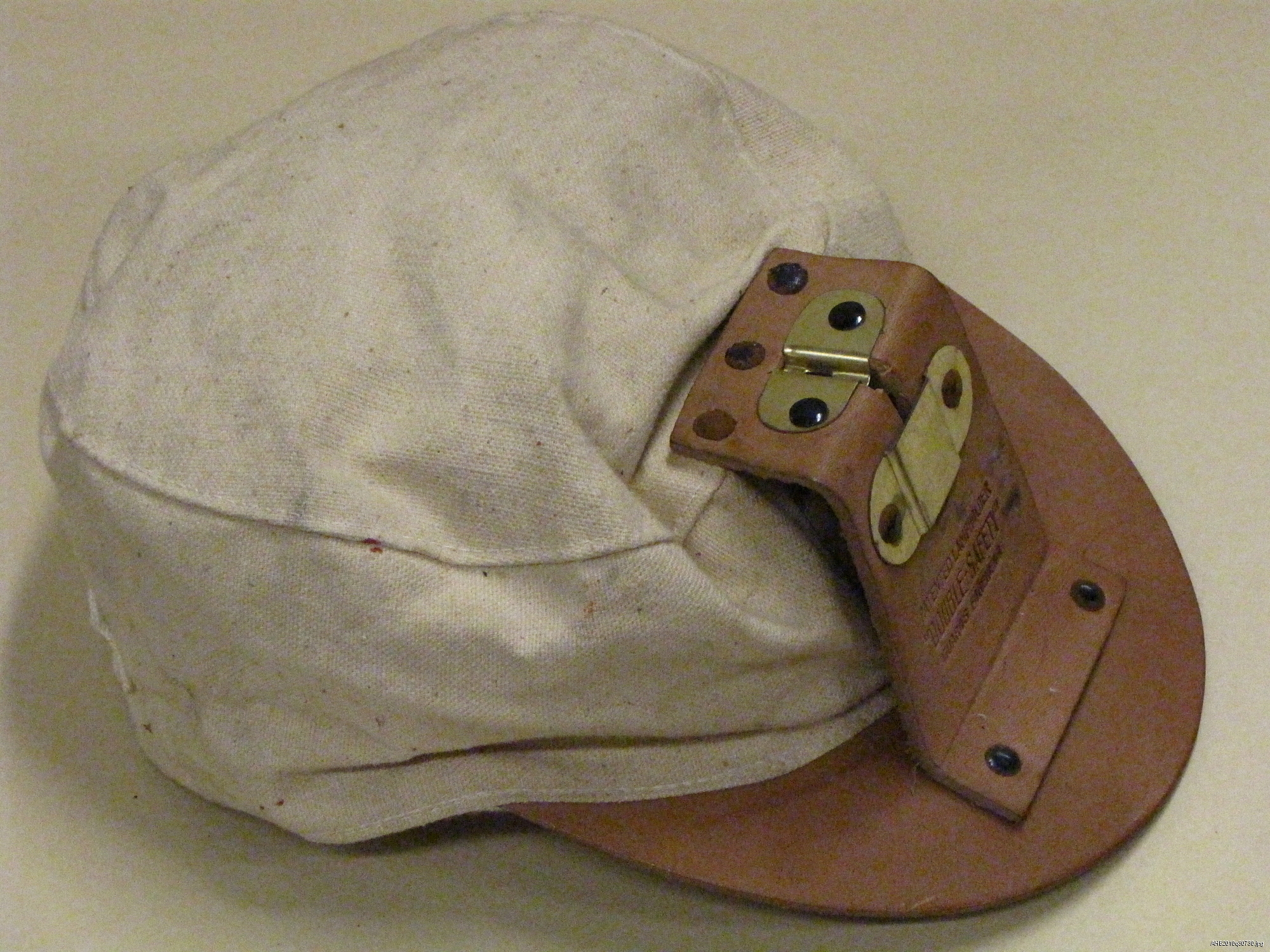
Canvas mining cap with leather brim
20th c. Canvas Mining Cap & Lamp Bracket
A miner’s light was essential to their labor. Without light there was no sight, no work, and no wages. But this essential light was also lethal. Open flames could ignite the inflammable gas especially prevalent in coal mines and mining explosions with hundreds of casualties was a common occurrence in the late 19th and early 20th century. Miners often carried open flames into the mines in the form of candles and hanging lamps, and later wore the open flames of carbide lamps and oil-wick lamps on their caps and helmets. (https://americanhistory.si.edu/collections/object-groups/mining-lights-and-hats)


Elias married Susan May Cordell in Vigo County on 27 October 1889; after Susan's death in 1900, Elias married Laura May Higgins on 12 Marchh 1905 also in Vigo County. They were the parents of my great grandmother, Bessie Doris Bridgewater who was born 18 January 1914.


Monday, March 20, 2023

52 Ancestors in 52 Weeks: Week 12 "Membership"


Membership

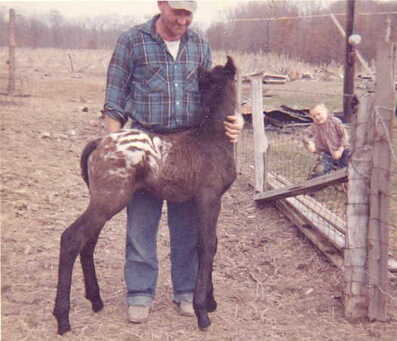
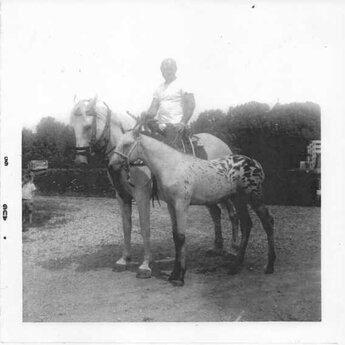
​My dad, Robert, grew up on a small family farm in rural Illinois, the youngest of seven children. His father, Dwight, raised Appaloosas; they were especially proud of the stallion that they bred and raised, Washburn’s Appach, who Dad always called "Apache."
Picture
Dwight with Appach, Robert in the background on tricycle (April 1965)
Picture
Dwight Washburn on Polly with her colt, Appach (Aug. 1965); Robert is nearby, on the left hand side of the photo.


Dad lost his dad when he was just a boy, at age 14. Dwight's membership in an Appach's registration with the Appaloosa Horse Club was especially important to my dad. He often talked about it.


Friday, March 17, 2023

52 Ancestors in 52 Weeks: Week 11 "Lucky"


  Lucky


It was pure luck one day when a couple walked into the library where I worked, searching for some information on an ancestor. The couple was in the area for a cousin's reunion in a town about an hour south of my hometown. They had a little extra time, so decided to stop in our library.

While I chatted with them about their query, the gentleman mentioned that  his family were Rogers from Lawrenceville, Illinois. I told him that my grandpa's family was from Lawrenceville and his grandmother's sister had married a Rogers. 

What a surprise - my grandfather's grandmother's sister was his grandmother! 

He had a lovely collection of photos of the family that I had never seen before and he was so kind to share them. We have kept in touch and currently have a few other photos in the mail to each other. 💓


Sarah (Mills) and Peter Pargin with their daughters. 

My great great grandmother Goldie is standing.

Saturday, March 11, 2023

52 Ancestors in 52 Weeks: Week 10 "Translation"


 Origins of Washburn Family Name

From Wikipedia:

This family, of Norman origin, can be traced through the lands in Worcestershire and Gloucestershire, namely the little hams of "Little Washbourne" and "Great Washbourne". Little Washbourne, historically in the parish of Overbury, and the manor thereon, eventually becoming known as "Wasseburne Militis" or "Knyghtes Wasshebourne", for the many from this line that bore that honour.

In the Herald's College, London, Vol. I., page 54, is given: Washbourne. "A name of ancient Norman descent; the founder was knighted on the field of battle by William the Conqueror and endowed with the lands of Little Washbourne and Great Washbourne, Counties of Gloucester and Worcester".

The name may have come from the Saxon for "from the flooding brook," with "wash" meaning "swift moving current of a stream," and "burn" referring to a brook or a small stream. It may have originated from the River Isbourne, which flowed near Little and Great Washbourne.


Saturday, March 4, 2023

52 Ancestors in 52 Weeks: Week 9 "Gone Too Soon"


Gone Too Soon


    My great-grand uncle (brother of my great grandfather) Arthur Jay Washburn 


Born in 1921, Arthur was only 30 years old when he passed away, but he packed so much into those years. He married, fathered seven children, and fought in World War II. After the war, he had gone to work in Lawrenceburg, Indiana and died in a terrible fire at his boarding house. 

His wife, Clarine Moore, never remarried and raised all of their children on her own.


Saturday, February 25, 2023

52 Ancestors in 52 Weeks: Week 8 "I Can Identify"


This photo features Ed Washburn, my great-great grandpa, in the 1930s. 

Ed was hired by the city to plow the sidewalks. This photo was taken in front of the Ellshoff home on Maple St in Marshall; if you look closely you can see the Elshoff children looking out the front window of the home.

The large building on the left hand side was a woolen mill. Eldridge S. Janney, an attorney with failing eyesight, came to Marshall from Palestine, Illinois, in 1853, built a mill, and started business with Mr. Alexander. Their newspaper advertisements urged the public to bring their wool to the mill in exchange for woven blankets and garments. By 1856 the mill was “going full blast”, but it burned in 1858 and was replaced with a brick building. From 1869 to 1875 the mill was advertised as belonging to Janney and Son. Thomas Janney was selling knitting machines. E. L. Janney died in 1875, and in 1876 Lyman Booth and Co. had possession of the mill and was putting it in “tip top order”. The new mill must not have been successful, because articles in 1883 and 1899 by the editor of the newspaper were urging the public to bring a woolen mill back to Marshall to help the economy. In 1908 John Rademaker came to Marshall and started his first bottling works in the old woolen mill building. In 1911 it was the home of the Judd Harlan stock barn. The building was sold in 1914 to Robert Thompson, and in 1915 a new vending machine factory was starting business there. In 1919 it was used as a warehouse for supplies used in paving the National Road. A “Dinky Railroad” was built to carry the materials to the building sites along the road. Eventually the woolen mill building fell into disrepair, and it collapsed in a “cloud of dust” in the 1940s.

I have a few photos of Ed that I’ve collected over the years and they almost all show him with one of his horses. I wish I had known him - I'd love to hear all about the horses that he knew over the course of his life. I have a feeling he might just be the one who passed the love of horses down to his grandson, Dwight, who passed it down to his son, Robert . . . my dad, who passed it down to me.


Saturday, February 18, 2023

52 Ancestors in 52 Weeks: Week 7 "Outcast"


 Outcast
 
 Benjamin Franklin Pargin, 4th great granduncle, was born in Lawrence County, Illinois in January 1842. He headed west sometime after serving in the Civil War.


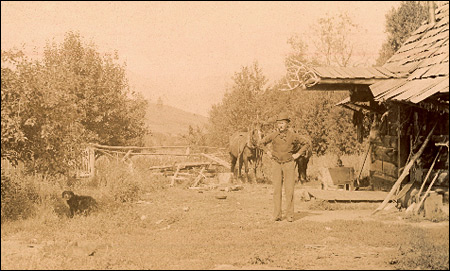
                        Benjamin Franklin Pearrygin stands in front of his cabin near the lake that still bears his name.


Karen West (https://methownet.com/grist/features/namingpearrygin.html) wrote this biography of Ben and his life as an outcast, mostly likely by his choice:

B.F. "Ben" Pearrygin scouted the Methow Valley in 1887, one year after it opened to white settlement. He claimed land on the lake that bears his name and would have taken up squatters rights until the land was surveyed and he could file for a homestead.

In 1888 he showed brothers Emil and Albert Ventzke around and advised them where to take up squatters rights. The Ventzkes were Prussian/German immigrants whose parents settled in Wisconsin. Emil, who was about 21 years old, settled near Cub Creek, and Albert, who was a few years older, near Rock View on the north fork of the Methow River, now more commonly known as the Chewuch River. (Their brother Fred Ventzke, a surveyor, took up a homestead near Winthrop in 1898.)

Little is known about Ben Pearrygin. The most complete, and unflattering, description of him is in an excerpt from a letter dated Jan. 21, 1916. It was written by Guy Waring, who founded Winthrop, to Professor Meany at the University of Washington. Meany had inquired about the origin of local place names. Waring said, "Pearrygin Lake ... was named after Benjamin Franklin Pearrygin; who was the third squatter in the valley and who located on this lake's shore. He was from Southern Illinois and had the appearance of one's ideal Portugese Pirate. I have little doubt that he was of Southern European descent and originally a "Perugino." He was undoubtedly an evil man and, I suspected, had sold his soul to the devil but had not collected the pay! He met his death by falling out of a barn loft while drunk and died after five days of agony that more than expiated all his sins. He was a merry soul, withal."

Friday, February 17, 2023

52 Ancestors in 52 Weeks: Week 6 "Social Media"

My "Social Media" story about an ancestor comes from an early form of social media for family researchers . . . Rootsweb message boards. 

Several years ago a man reached out asking if I had more info on Sylvia Moore. Sylvia was the second wife of my great great grandfather, Charles Samuel Moore. 

Charley had been a mystery to me for some years before I pieced together a little more of his story. He was raised in Edgar County, Illinois where he married a local girl and they raised a family. The 1930 census shows Charley and his wife Dolly, my great great grandmother, at home in Paris, Edgar Co, Illinois with several of their children. Then he and Dolly disappeared. I found each of them in later records on the west coast, each with a new spouse. Charley in California with Sylvia, and Dolly in Washington with a man named Fred Gilson.

I didn't know much about Sylvia so I wasn't able to answer many questions for the gentleman who reached out to me, but he had some exciting news for me! He remembered Charley, knew where he was buried, and it was actually this man's family who had a headstone placed for Charley at the cemetery in California. They had monkeys engraved on the stone because, he remembered, Charley always had a pet monkey! 


Then he found and very kindly sent me the only photo that I have of Charley Moore - in his junkyard with his pet monkey. 💓


Thursday, February 2, 2023

52 Ancestors in 52 Weeks: Week 5 Oops!


"Oops!" When I read this week's prompt for the 52 Ancestors in 52 Weeks challenge, one story immediately came to mind. This is the story that my boys, who claim no interest in our family history, ask for  me to tell most often.

Our illustrious - or not! - Civil War ancestor, George Samuel Sult. 

George was born in the late fall of 1842, the first child of Jacob & Georgiana Sult, in Butler County, Ohio[1]. By 1860 several more children had joined the family and the Sults had moved a little further west, to Indiana[2].

George joined the Union Army 1 February 1862, in Indianapolis, Indiana, when he was 19 years old, enlisting as a private in Company K of the 52nd Indiana Infantry [3].

The company was on the move from nearly the moment that George joined. Here's a timeline of their movements [4]:

February 1, 1862: Regiment raised in Rushville & Indianapolis, Indiana

February 7, 1862: Left Rushville, Indiana for Fort Donelson, TN

February 12–16, 1862: Victory at the Battle of Fort Donelson

February 16, 1862 - April 18, 1862: Garrison at Fort Henry, TN

March 11, 1862: Action at Paris, TN with light casualties. Withdrew

April 18, 1862: Moved to Pittsburg Landing, TN in the aftermath of the Battle of Shiloh

April 29, 1862 - May 30, 1862: Advance on and sieged of the town of Corinth, TN as General Henry Halleck pursued confederate General P. G. T. Beauregard in retreat from Shiloh.

June 1, 1862 - July 21, 1862: March to Memphis, Tennessee, via Grand Junction, LaGrange, and Holly Springs

June 4, 1862: During the march to Memphis, Colonel James M Smith resigned and Lt. Colonel Edward H. Wolfe assumed command

July 22, 1862 - September 1, 1862: Duty at Memphis, TN

September 2, 1862: Action near Memphis, TN

September 17,1862: Durhamsville

September 30, 1862, to January 18, 1863: Garrison duty at Fort Pillow, Tennessee, and operations against guerrillas in Tennessee and Arkansas .

September 19–25, 1863: Expedition to Jackson, MS (as a detachment)

September 28, 1863 - October 5, 1863: Expedition to Covington, Durhamville, and Fort Randolph

The unit went on to serve until the end of the war, officially mustering out on 10 September 1865.

George Sult's time in the military was short though - OOPS! - in October 1862, just a few months after joining when he was stacking firewood in camp and gave himself a hernia [5]! His Civil War pension record is quite extensive and details the health struggles that he faced the rest of his life [6]. Many of his associates who wrote letters for his pension application described him as "a small yellow man."

George Sult Pension FIle

On 25 November 1863 George married Mary Davis [7]. Sadly, Mary passed away just a few years later in September 1865 [8]. George then married Nancy Joslin  25 March 1869 [9]. They had four children - Theodore Wesley, Mary Etta, Rose Zella, and Ollie Belle [10]. Mary Etta is my great great grandmother.

George Sult 

George passed away 18 July 1893 in Sullivan County, Indiana [11]. He is buried in Center Ridge Cemetery with a military stone despite his "Oops!" moment that cut his military career short [12].

------------------------------------------------

[1] 1850 U.S. census, Cincinnati Ward 6, Hamilton, Ohio; Page: 163; Image: 168, George Sult; digital image, Ancestry.com (http://ancestry.com : accessed 27 January 2023), citing National Archives microfilm publication M432 roll 689.

[2] 1860 U.S. census, Spencer, Jennings, Indiana; Page: 269; Image: 271, George Sult; digital image, Ancestry.com (http://ancestry.com : accessed 27 January 2023), citing National Archives microfilm publication M653 roll 271 .

[3] U.S., Civil War Draft Registrations Records, 1863-1865; George Sult, digital image, Ancestry.com (http://ancestry.com : accessed 27 January 2023).

[4] U.S. Department of the Interior. (n.d.). Battle unit details. National Parks Service. Retrieved January 27, 2023, from https://www.nps.gov/civilwar/search-battle-units-detail.htm?battleUnitCode=UIN0052RI

[5] George Sult's pension application; service of George Sult (Pvt., Co. K, 52d IN Infantry, Civil War); Case Files of Approved Pension Applications ..., 1861–1934; Civil War and Later Pension Files; Record Group 15: Records of the Department of Veterans Affairs; National Archives, Washington, D.C.

[6] ibid.

[7] Indiana Marriage Collection, 1800-1941.

[8] George Sult's pension application; service of George Sult (Pvt., Co. K, 52d IN Infantry, Civil War); Case Files of Approved Pension Applications ..., 1861–1934; Civil War and Later Pension Files; Record Group 15: Records of the Department of Veterans Affairs; National Archives, Washington, D.C

[9] Grant County, Indiana, Marriage Records Volume I Book C (Sept 1831-June 1, Compiled by--Grant County Genealogy Club; Book: 4; Page: 209.

[10] George Sult's pension application; service of George Sult (Pvt., Co. K, 52d IN Infantry, Civil War); Case Files of Approved Pension Applications ..., 1861–1934; Civil War and Later Pension Files; Record Group 15: Records of the Department of Veterans Affairs; National Archives, Washington, D.C

[11]Find A Grave (http://www.findagrave.com : accessed 28 January 2023), memorial page 52952032 , PVT George Samuel Sult (1842 - 1893), created by "Wabash Valley Genealogy Society Cemetery Committee"; citing Center Ridge Cemetery, Sullivan, Sullivan, Indiana, USA.

[12]Find A Grave (http://www.findagrave.com : accessed 28 January 2023), memorial page 52952032 , PVT George Samuel Sult (1842 - 1893), created by "Wabash Valley Genealogy Society Cemetery Committee"; citing Center Ridge Cemetery, Sullivan, Sullivan, Indiana, USA.